

Psyche Games
Search:
 
 
Identifying Technique
 
Modern Psychology
 
Psychological concepts
 
History
 
Site Map
 
newsupdate.gif
 

Home » Psychological Topics C » Carl Jung

Carl Jung

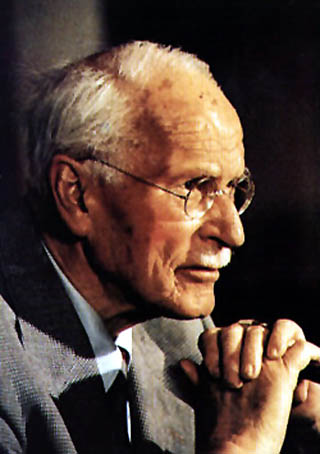
Carl Gustav Jung (July 26, 1875 – June 6, 1961) was a Swiss psychiatrist and founder of Analytical Psychology. His approach to human psychology emphasized understanding the psyche through exploring the world of dreams, art, mythology, world religion and philosophy. He was a strong believer in the importance of integration of opposites (e.g. masculine and femininine, thinking and feeling, science and spirituality). Though not the first to analyze dreams, his contributions to dream analysis were influential and extensive. Although he was a theoretical psychologist and practicing clinician for most of his life, many of his studies extend into other realms of the humanties: from comparative religion and philosophy, to criticism of art and literature. (Interestingly, Jungian ideas are seldom mentioned in college psychology courses while they are often explored in humanities courses.)


Many pioneering psychological concepts were originally proposed by Jung. Some of these are:

  1. The Archetype
  2. The Collective Unconscious
  3. The Complex
  4. Synchronicity

Jungian psychology

Although Jung was wary of founding a "school" of psychology, (he was once rumored to have said, "Thank God I am Jung and not a Jungian."), he did develop a distinctive approach to the study of the human psyche. Through his early years working in a Swiss hospital with psychotic patients and collaborating with Freud and the burgeoning psychoanalytic community (eventually he broke away from Freud and fell into a deep depression for several years as a result), he gained a close look at the mysterious depths of the human unconscious. Fascinated by what he saw (and spurred on with even more passion by the experiences and questions of his personal life) he devoted his life to the exploration of the unconscious. Identifying not experimental natural science as the best means to this end, but rather the world of dream, myth, and psychopathology, Jung sought to understand psychology through the study of the humanities.

The ultimate goal of Jung's life work was the reconciliation of the life of the individual with the world of the supra-personal archetypes. He came to see the individual's encounter with the unconscious as central to this process. The human experiences the unconscious through symbols encountered in all aspects of life: in dreams, art, religion, and the symbolic dramas we enact in our relationships and life pursuits. Essential to the encounter with the unconscious, and the reconciliation of the individual's consciousness with this broader world, is learning this symbolic language. Only through attention and openness to this world (which is quite foreign to the modern Western mind) is the individual able to harmonize his or her life with these suprapersonal archetypal forces.

"Neurosis" results from a disharmony between the individual's consciousness and the greater archetypal world. The aim of psychotherapy is to assist the individual in restablishing a healthy relationship to the unconscious (neither being swamped by it--a state characteristic of psychosis--nor completely shut off from it--a state that results in malaise, empty consumerism, narcissism, and a life cut off from deeper meaning). The encounter between consciousness and the symbols arising from the unconscious enriches life and promotes psychological development. Jung considered this process of psychological growth and maturation (which he called the process of individuation) to be of critical importance to the human being, and ultimately to modern society.

In order to undergo the individuation process, the individual must allow herself to be open to the parts of herself beyond her own ego. In order to do this, the modern individual can pay attention to her dreams, explore the world of religion and spirituality, and question the assumptions of the operant societal worldview (rather than just blindly live life in accordance with dominant norms and assumptions).

The collective unconscious

Jung's concept of the collective unconscious has often been misunderstood. In order to understand this concept, it is essential to understand his idea of the archetype, something foreign to the highly rational, scientifically-oriented Western mind. Here is a useful analogy: the collective unconscious is the DNA of the human psyche. Just as all humans share a common physical heritage and predisposition towards specific physical forms (like having two legs, a heart, etc.) so do all humans have a common psychological predisposition. Our physical predispostions are determined by our DNA, while our psychological predispositions are stored in the collective unconscious. Like the human genome project that took on the tremedous labor of analyzing the information stored in the human DNA, Jung took on the even more extensive task of exploring and attempting to discern the mysteries stored in the collective unconscious. However, unlike the simple, quantifiable information that composes DNA (in the form of coded sequences of nucleotides), the collective unconscious is composed of archetypes. In sharp contrast to the objective material world, the world of the archetypes can not be adequately understood through quantitative modes of research. Instead it can only begin to be revealed through an examination of the symbolic communications of the human psyche--in art, dreams, religion, myth, and the themes of human relational/behavioral patterns. Devoting his life to the task of exploring and understanding the collective unconscious, Jung discovered that certain symbolic themes existed across all cultures, all epochs, and in every individual. Together these symbolic themes comprise "the archetypes of the collective unconscious."

The shadow

The shadow is an unconscious construct that is defined as the diametrical opposite of the ego. The shadow represents everything that the conscious person does not wish to be identified with. For instance, someone who identifies as being kind has a shadow that is evil. Conversely, an individual who is evil has a kind shadow. The shadow is not necessarily good or bad. It simply counterbalances some of the one-sided dimensions of our personality. Jung emphasized the importance of being aware of shadow material and incorporating it into conscious awareness.

Anima and Animus

Jung identified the anima as being the unconscious feminine component of men and the animus as the unconscious masculine component in women. (Many modern day Jungian practitioners believe that every person has both an anima and an animus). Jung stated that the anima and animus act as guides to the unconscious unified Self, and that forming an awareness and a connection with the anima or animus is one of the most difficult and rewarding steps in psychological growth. Jung reported that he identified his anima as she spoke to him, as an inner voice, unexpectedly one day. (Interestingly, Jung's anima voice was the voice of a former patient with whom Jung had an open affair.) Oftentimes, when people ignore the anima or animus complexes, the anima or animus vies for attention by projecting itself onto others. This explains, according to Jung, why we are sometimes immediately attracted to certain strangers: we see our anima or animus in them. Love in first sight is an example of anima and animus projection. Moreover, people who strongly identify with their gender role (e.g. a man who acts aggressively and never cries) have not developed any significant relationship with either their anima or animus.

Jung's life

Born in Kesswil, in the Swiss canton of Thurgau on July 26 1875, Jung lived until the 6 June, 1961. A very solitary introverted child, he was convinced from childhood that he had two personalities— a modern Swiss citizen, and a personality more at home in the eighteenth century. His father was a pastor, but, although Jung was close to both parents, he was rather disappointed in his father's academic approach to faith. Jung wanted to study archaeology at university, but his family were too poor to send him further afield than Basel, where they did not teach this subject, so instead Jung studied medicine at the the University of Basel from 1894-1900. The formerly introverted student became much more lively here. Towards the end of studies here, his reading of Krafft-Ebbing persuaded him to specialise in psychiatric medicine. He later worked in the Burgholzi, a psychiatric hospital in Zurich]. In 1906, he published The Psychology of Dementia Praecox, and later sent a copy of this book to Freud, after which a close but brief friendship between these two men followed (see section on Jung and Freud). By 1913, however, especially after Jung had published Wandlungen und Symbole der Libido (known in English as The Psychology of the Unconscious) their theoretical ideas had diverged so sharply that the two men fell out. It is generally accepted that after this falling-out, Jung had some form of psychotic breakdown, exacerbated by news of the First World War, which had a dire effect on Jung even in his own neutral Switzerland. Following World War I, Jung travelled extensively. He visited Northern Africa shortly after World War I, and New Mexico and Kenya in the mid-1920s. In 1938, he delivered the Terry Lectures, Psychology and Religion, at Harvard. It was at about this stage in his life that Jung visited India, and while there, had dreams related to King Arthur. This convinced him that his agenda should be to pay more attention to Western spirituality, and his later writings do show deep interests in Western mystery tradition and esoteric Christianity, and especially alchemy. In 1903 Jung married Emma Rauschenbach, who bore him five children. Their marriage lasted until Emma's death in 1955, but certainly experienced emotional torments, brought about by Jung's relationships with women other than Emma. The most well-known women with whom Jung is believed to have had extramarital affairs are Sabina Spielrein and Toni Wolff. Jung continued to publish books until the end of his life, including a work showing his late interest in flying saucers. He also enjoyed a brief friendship with an English Catholic priest, Father Victor White, who corresponded with Jung after he had published his controversial study of the Book of Job.

Jung and Freud

At university, Jung was a student of Krafft-Ebing. For a time, Jung was Freud's heir-apparent in the psychoanalytic school. After the publication of Jung's Symbols of Transformation (1912), Jung and Freud endured a painful parting of ways: Jung seemed to feel confined by what he believed was Freud's narrow, reductionistic, and rigid view of libido. Freud held that all libido was at base sexual, while Jung's psychological work continued to explore libido as multiple and often synthetic. After the break with Freud, Jung questioned how such divergent views as Freud's, Alfred Adler's and his own could develop out of Psychoanalysis. The result of his questionings was Psychological Types (volume 6 of the Collected Works), in which Jung outlines a framework within which psychological orientations can be identified.

Psychological Types

The often misunderstood terms extrovert and introvert derive from this work. In Jung's original usage, the extrovert orientation finds meaning outside the self, in the surrounding world, whereas the introvert is introspective and finds it within. Jung also identified four primary modes of experiencing the world: thought, feeling, sensation, and intuition. (He referred to these as the four functions.) Broadly speaking, we tend to work from our most developed function, while we need to widen our personality by developing the others. Related to this, Jung noted that the unconscious often tends to reveal itself most easily through a person's least developed function. The encounter with the unconscious and development of the inferior function(s) thus tend to progress together.

Significant in Jung's theory is that "type preferences" are inborn and not socially constructed through interaction with the parents, family, culture and other external influences. While this is true, the individual is impacted in the quality and strength of the development in her or his preferences. Nature and nurture are both at play. A supportive environment will support and facilitate inborn preference development; a contrary environment will impede or retard the natural development of inborn preferences. The research on the mental health problems of many left-handed children forced to be right-handed is not dissimilar to what often occurs for people "forced" into a non-preferred mode of personal orientation.

In the field of family systems theory, psychological type holds potential as another way to understand the internal conflicts and alliances within the family. Parents can often be seen to have concern about children who operate from type preferences different from theirs and run the risk of encouraging, and at times coercing, children into a false personality. As a child resists or naturally fails to adhere to the parental guidance, conflict readily occurs. "Type-alike" family members will naturally gravitate toward each other. The best approach is to try to identify type preferences of all family members and to actively encourage those preferences, while training children, as well, in non-preferred functions.

Psychological Types – another view

Imagine a person (the subject) observing an object or event. For example, a house that they are considering buying. The introvert relates more to the subject – what would this house, as a home, do for their life experience? The extravert relates more to the object – the house. What could be done with this particular building? The focus being on the building itself.

There are four psychological functions in Jung’s model: two rational functions (thinking and feeling), and two perceptive functions (sensation and intuition).

Sensation is the perception of facts. In our example, suppose the house is well built, it has a large garden, it is two miles from the shops, and the buyer has a nervous tic when he/she mentions money.

Intuition is the perception of the unseen. For example, the seller is hiding something, I’d be content here for the next twenty years.

Thinking is analytical, deductive cognition. For example, compared to the house I viewed yesterday, this is overpriced, bigger, nearer to work, overall it would cost so much per month more on my mortgage, but I’d spend two hours less travelling each week.

Feeling is synthetic, all-inclusive cognition. For example "I’ll have to sleep on it before I know whether this house could be home. Even then I may not know!" Feeling takes time. The feeling function is not the same as emotion, which Jungian psychology refers to as affect (emphasising its physiological component) but the feeling function and affect (emotion) clearly do influence each other.

In any person, the degree of introversion/extraversion of one function can be quite different to that of another function. For example extraverted intuition— imagining endless means of political change; with relatively introverted thinking— "How would I fit into such a society?"

Introverted intuitives tend to be weak at extraverted sensation (and vice versa)— they have very good insight into themselves, their unseen motives and likely long term goals, but can’t find their adjustable spanner nine times out ten. Intuition is often inspired, and other times completely wrong. It has to be checked with one of the rational functions, thinking or feeling. Introverted thinking types tend to be weak at extraverted feeling.

Note. As for training children, while it is a good thing to appreciate the psychological type of a child, or indeed of anyone (it is also very rarely practised), it is most productive to understand the psychological typology of children – then leave them alone. ‘Leading’ anyone into their inferior function can be dangerous. Though it has its uses for mature analysands with the assistance of an experienced therapist, it is not part of the educational or parental role. If a child has suppressed feeling, for example, it may be a survival strategy.

Influence

Jung has had an enduring influence on psychology as well as wider society. He has influenced psychotherapy (see Jungian psychotherapy ).

•The concept of introversion vs. extroversion
•The concept of the complex
•Much of Joseph Campbell's thought leading to the creation of Star Wars and, to a lesser extent, The Matrix trilogy
•Myers-Briggs Type Indicator tests were inspired by Jung's Psychological Types theory. The Myers-Briggs Type Indicator assesses people on extraversion and introversion, Jung's function types and also on judging-perceiving, a dimension not found in Jung's original taxonomy but germane to his distinction between rational and irrational functions.
•Jung's influence can sometimes be found in more unexpected quarters. For example, Jung once treated an American patient suffering from chronic alcoholism. After working with the patient for some time, and achieving no significant progress, Jung told the man that his alcoholic condition was near to hopeless, save only the possibility of a spiritual experience. Jung noted that occasionally such experiences had been known to reform alcoholics where all else had failed.

The patient took Jung's advice seriously and set about seeking a personal spiritual experience. He returned home to the United States and joined a Christian evangelical church. He also told other alcoholics what Jung had told him about the importance of a spiritual experience. One of the alcoholics he told was Ebby Thacher, a long-time friend and drinking buddy of Bill Wilson, co-founder of Alcoholics Anonymous (A.A.) Thacher told Wilson about Jung's ideas. Wilson, who was finding it hard to maintain sobriety, was impressed and sought out his own spiritual experience. The influence of Jung ultimately found its way in the 12-step program of Alcoholics Anonymous, drafted by Wilson, and from there into the whole 12-step recovery movement, which has touched the lives of millions of people.

Influence on culture

Jung had a 16-year long friendship with author Laurens van der Post from which a number of books and film were created about Jung's life.
The concept of the collective unconscious is one of the main topics in the Dune novel series.
Jung's influence on noted Canadian novelist Robertson Davies is apparent in many of Davies's fictional works. In particular, The Cornish Trilogy and his novel The Manticore each base their design on Jungian concepts.
The Progressive Metal band, Tool have incorporated Jung's work into their album, Ænima. Additionally, The Police made references to Carl Jung in their album Synchronicity.
J. Michael Straczynski's "Babylon 5" television series used many of Jung's concepts throughout the series.
The video games Xenogears and Xenosaga utilize many of the ideas proposed by Carl Jung as major storyline components of the game, and even create physical manifestations of his notions within actual characters, Albedo, Nigredo, Rubedo, etc.
Jung's writing was introduced to Italian film maker, Federico Fellini in the 1950s and had an effect on the way Fellini incorporated dreams into films after La Dolce Vita.