

Home Astro Psychology Colour Psychology Psyche games Online Psychology Tests Contact Us

Psychology Home » Psychological Topics C » Carl Rogers

Carl Rogers

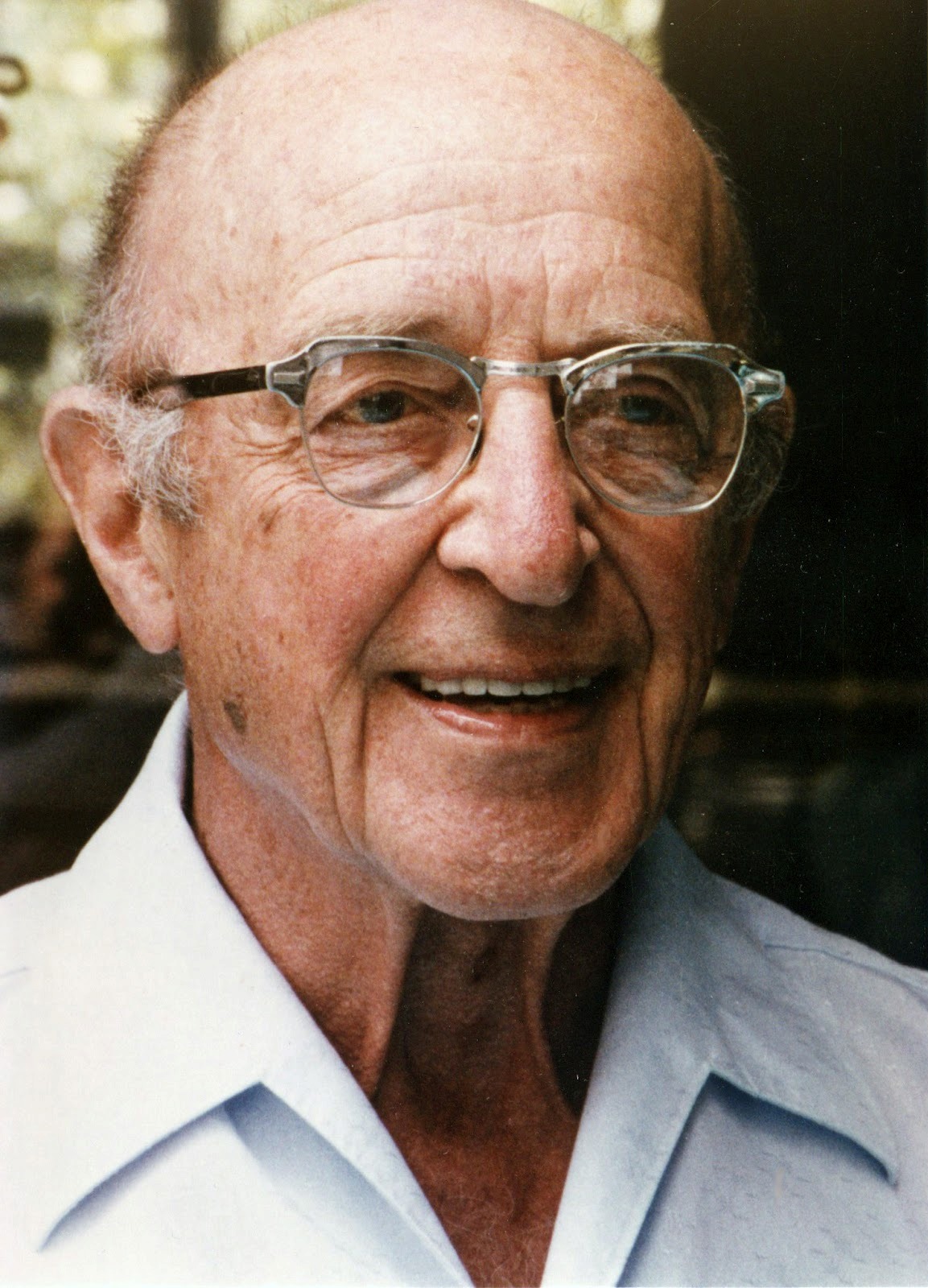
Carl Ransom Rogers (January 8, 1902, Oak Park, Illinois - February 4, 1987) was perhaps the most influential psychologist in American history and was instrumental in the development of non-directive psychotherapy, also known as 'client-centered' or 'Person centered psychotherapy'.

'Rogerian psychotherapy' became widely influential, embraced for its humanistic approach. Rogers also made significant contributions to the field of adult education, with his Experiential theory of learning. Rogers maintained that all human beings have a natural desire to learn. He defined two categories of learning: meaningless, or cognitive learning (e.g., memorizing multiplication tables) and significant, or experiential learning (applied knowledge which addresses the needs and wants of the learner).

Rogers' basic tenets were unconditional positive regard, genuineness, and empathic understanding, with each demonstrated by the counselor. According to Rogers, these tenets were both necessary and sufficient to create a relationship conducive to enhancing the client's psychological well being, by enabling the client to fully experience their phenomenological field, or self.

Rogers' father was an engineer, his mother a housewife and devoted Christian. Following an education in a strict, religious and ethical environment, he became a rather isolated, independent and disciplined person, and acquired a knowledge and an appreciation for the scientific method in a practical world. His first career choice was agriculture, followed by religion. At age 20, following his 1922 trip to Beijing, China, for an international Christian conference, he started to doubt his religious convictions; to help him clarify his career choice, he attended to a seminar entitled Why am I entering the Ministry?, after which he decided to change career.

After two years he left the seminary and took his M.A. (1928) and his Ph.D. (1931) from Columbia University's Teachers College. While completing his doctoral work, he engaged in child study at the Society for the Prevention of Cruelty to Children, in Rochester, New York, becoming the agency's director in 1930.


He was offered a full professorship at Ohio State University in 1940. In 1942, he wrote his first book, Counseling and Psychotherapy. In it, Rogers suggested that the client, by establishing a relationship with an understanding, accepting therapist, can resolve difficulties and gain the insight necessary to restructure his life.

Then, in 1945, he was invited to set up a counseling center at the University of Chicago. It was while working there, in 1951, he published his major work, Client-Centered Therapy, wherein he outlines his basic theory. In 1956 Rogers became the first President of the American Academy of Psychotherapists. In 1957 he arrived at the University of Wisconsin. However, following several internal conflicts at the department of psychology at Wisconsin, Rogers became disillusioned with academia.

In 1964, Rogers was selected 'humanist of the year' by the American Humanist Association, and he received an offer to join the staff of the Western Behavioral Studies Institute (WBSI) for research, which he accepted and then moved to La Jolla, California. He remained in La Jolla, doing therapy, speeches and writing until his sudden death 23 years later.

Rogers and some colleagues are also the founders of 'Group Encounter' (for young people, managers etc.) and of 'Marriage Encounter' (ME).

Rogers' idea of the 'fully functioning person' involved the following qualities, which show marked similarities to Buddhist thinking:

  1. Openness to experience:-The accurate perception of one's feelings and experience in the world
  2. Existential living:-Living in the present, rather than the past (gone) or the future (yet to come)
  3. Organismic trusting:-Trusting one's own thoughts and feelings as accurate; do what comes naturally
  4. Experiential freedom:-To acknowledge one's freedoms and take responsibility for one's own actions
  5. Creativity:-Full participation in the world, including contributing to others' lives

Quotes

"Experience is, for me, the highest authority. The touchstone of validity is my own experience. No other person's ideas, and none of my own ideas, are as authoritative as my experience. It is to experience that I must return again and again, to discover a closer approximation to truth as it is in the process of becoming in me. Neither the Bible nor the prophets -- neither Freud nor research --neither the revelations of God nor man -- can take precedence over my own direct experience. My experience is not authoritative because it is infallible. It is the basis of authority because it can always be checked in new primary ways. In this way its frequent error or fallibility is always open to correction." Carl Rogers, from 'On Becoming a Person

"If we value independence, if we are disturbed by the growing conformity of knowledge, of values, of attitudes, which our present system induces, then we may wish to set up conditions of learning which make for uniqueness, for self-direction, and for self-intitiated learning." Carl Rogers


Psychology refers to applied scientific study of mental processes and behavior. Psyche games are conducted to improve the mental ability of the people. Astro psychology, color psychology, modern psychology, cognitive psychology, evolutionary psychology, medical psychology, neuro psychology are different kinds of psychology offered.

Color psychology | Introduction to psychology | Information on psychology | Fields of psychology | Modern psychology | Brief history of psychology | Psychological tests | Psychiatry | Psychohistory | Abnormal psychology | Activity theory of social psychology | Social psychology theories | Cognitive psychology | Educational psychology | Evolutionary psychology | Medical psychology | Neuropsychology | Personality psychology | Psychoanalysis | Psychology and religion | Psychotherapy | Biopsychology | Transpersonal psychology | Contact us | Psychegames articles | Archives | Sitemap |


Abstract Oil Painting | San Francisco Tour | Auto transport | Alberta Mortgage Brokers | Kelowna Area Rugs | Napa Valley Tours | CeMAP Training | Boxing Apparel | Property auctions | Fragrance | Vinyl windows |Granite Kitchen Countertops | California Printing | We Buy Houses | Halloween Costumes | Health insurance in california | Halloween Men Costumes | Dermalogica Products | Digital Camera Battery | Protein
Copyright @2005 psychegames.com